
Technology plays a critical role in how businesses operate. From managing daily operations and protecting sensitive information to supporting employees and maintaining business continuity, reliable IT infrastructure is essential.
As businesses grow, so do their technology requirements. At some point, many organizations face an important decision: should they build an internal IT team or partner with a managed IT services provider?
Both approaches offer advantages, but the right choice depends on your business size, budget, operational needs, and long-term goals.
In this article, we'll explore the differences between managed IT services and in-house IT, compare their benefits and limitations, and help you determine which approach makes the most sense for your business.
What Are Managed IT Services?
Managed IT services involve outsourcing some or all of your company's IT responsibilities to an external provider, commonly known as a Managed Service Provider (MSP).
Rather than relying entirely on internal employees to manage technology, businesses work with a dedicated provider that delivers ongoing IT support and management.
Depending on the service agreement, managed IT services can include:
IT Support: Troubleshooting technical issues and helping employees resolve day-to-day problems.
Network & Infrastructure Management: Maintaining networks, servers, and essential business systems.
Cybersecurity: Supporting security monitoring, endpoint protection, and risk management.
Cloud Management: Managing cloud environments, applications, and infrastructure.
System Monitoring & Maintenance: Identifying potential problems and performing routine updates to maintain performance.
Managed IT services typically operate through a recurring service agreement, allowing businesses to access technical expertise without maintaining a full internal IT department.
What Is In-House IT?
In-house IT refers to hiring employees who work directly within your organization to manage its technology requirements.
Depending on the company's size, this could mean employing a single IT specialist or building an entire department with dedicated roles for infrastructure, security, networking, and technical support.
One of the main advantages of an internal team is its familiarity with the business. Employees gain firsthand knowledge of company systems, workflows, and operational priorities.
Internal IT teams also provide greater direct control over technology decisions and can offer immediate on-site assistance when staff are available.
However, building and maintaining an internal department requires ongoing investment in recruitment, salaries, benefits, training, and technical resources.
Managed IT Services vs. In-House IT: Key Differences
While both approaches aim to keep business technology running efficiently, they differ in several important areas.
Factor | Managed IT Services | In-House IT |
|---|---|---|
Cost | Typically recurring service fees, with additional charges depending on scope | Salaries, benefits, training, tools, and infrastructure |
Expertise | Access to specialists across multiple IT disciplines | Expertise depends on the employees hired |
Availability | Coverage depends on the service agreement | Coverage depends on internal staffing and schedules |
Scalability | Services can often expand as business needs change | Growth may require additional hiring |
Control | Shared responsibilities with an external provider | Direct internal oversight |
Business Knowledge | Provider develops familiarity through ongoing collaboration | Employees work directly within the organization |
Let's examine these differences more closely.
1. Cost and Budget Considerations
Cost is often one of the biggest factors when deciding between managed IT services and an internal team.
With in-house IT, businesses must account for more than employee salaries. Recruitment, benefits, professional development, software tools, and employee turnover can all contribute to the total cost.
Managed IT services generally offer a more predictable recurring expense, with services defined through an agreement. This can make technology budgeting easier, particularly for small and mid-sized businesses.
However, managed services are not automatically the cheaper option. Pricing depends on the level of support, number of users, infrastructure complexity, and additional services required.
The key is to compare the total cost of each approach rather than focusing on monthly fees or salaries alone.
2. Access to Technical Expertise
Modern business technology involves multiple disciplines, including networking, cloud computing, cybersecurity, infrastructure management, and technical support.
Finding one internal employee with deep expertise across all these areas can be difficult.
Managed IT providers typically employ professionals with different technical specializations, allowing businesses to access a broader range of skills through a single service relationship.
An internal team, however, may have a stronger understanding of proprietary systems and company-specific technology requirements.
For businesses with highly specialized environments, this internal knowledge can be particularly valuable.
3. IT Support and Availability
Technical problems can disrupt operations, reduce productivity, and create frustration for employees.
An internal IT team can provide direct support and may be particularly effective when frequent on-site assistance is required.
However, support availability depends on staffing levels, working hours, and employee schedules.
Managed IT providers may offer extended support hours, proactive monitoring, and defined response times, depending on the agreement.
Businesses should evaluate how quickly issues are addressed, what support is available outside regular business hours, and whether on-site assistance is included.
4. Cybersecurity and Risk Management
Cybersecurity is an important consideration regardless of how a business manages its IT.
Organizations need appropriate safeguards to protect sensitive information, manage access, maintain secure systems, and respond to potential threats.
An internal IT department can develop security practices tailored to the company's environment. However, maintaining specialized cybersecurity expertise may require additional resources.
Managed IT providers can offer access to security professionals, monitoring tools, and established processes that may be difficult for smaller organizations to maintain independently.
It's important to remember that outsourcing IT does not eliminate a company's cybersecurity responsibilities. Businesses must still understand their risks, establish security expectations, and maintain appropriate oversight.
5. Scalability and Business Growth
As a business expands, its technology requirements often become more complex.
New employees need devices and system access. Additional locations require reliable connectivity. Growing operations may demand stronger infrastructure, improved security, and new applications.
With an internal IT department, meeting these requirements may involve hiring additional employees or investing in new technical capabilities.
Managed IT services can often scale more flexibly by adjusting service coverage and resources as requirements change.
For growing businesses, this flexibility can help reduce the operational challenges associated with expanding an internal department.
When Do Managed IT Services Make Sense?
Managed IT services can be a practical option for businesses that need reliable technology support without building a large internal IT department.
They may be particularly suitable when:
Your business needs ongoing IT support but cannot justify hiring multiple specialists.
Technical problems frequently interrupt employee productivity.
You want access to cybersecurity, cloud, and infrastructure expertise.
Your business is expanding and requires more flexible IT resources.
You want to reduce the time management spends coordinating technology issues.
For small and mid-sized businesses, managed IT services can provide a structured approach to technology management while allowing internal teams to focus on their core responsibilities.
When Does In-House IT Make Sense?
Maintaining an internal IT department may be the better choice for organizations with complex, highly customized, or business-critical technology environments.
In-house IT can be particularly valuable when a business requires frequent physical support, has specialized systems that demand extensive internal knowledge, or needs direct oversight of daily technology operations.
Larger organizations may also have the resources to employ specialists across multiple technical disciplines.
In these situations, an internal team can offer continuity, organizational familiarity, and close collaboration with other departments.
Can You Combine Managed IT Services and In-House IT?
Businesses don't always have to choose one approach over the other.
A co-managed IT model combines internal IT resources with support from an external managed services provider.
For example, an internal IT team might handle employee support, application management, and day-to-day technology requirements, while an external provider assists with cybersecurity, cloud infrastructure, system monitoring, or specialized projects.
This arrangement allows businesses to retain internal control while accessing additional expertise and resources when needed.
For organizations with growing technology demands, co-managed IT can offer a practical balance between internal knowledge and external capabilities.
How to Choose the Right IT Model for Your Business
Before deciding between managed IT services and in-house IT, consider your organization's current requirements and future plans.
Start by evaluating your existing technology environment. Identify recurring technical problems, security concerns, support gaps, and areas where your team may lack specialized expertise.
Next, consider your budget and staffing requirements. Compare the full cost of building an internal department against the services and support available through an external provider.
You should also evaluate your growth plans. If your organization expects to add employees, expand locations, or adopt new technologies, your IT model should be able to accommodate those changes.
Finally, consider how much direct control your business requires and whether a combination of internal and external resources would provide the best outcome.
The right IT model is the one that supports your business operations, manages risk effectively, and provides the flexibility to meet future needs.
Final Thoughts
Both managed IT services and in-house IT can provide businesses with the technical support needed to operate effectively.
An internal team offers direct oversight and a deep understanding of company operations, while managed IT services provide access to specialized expertise, flexible resources, and structured ongoing support.
For some organizations, combining both approaches may deliver the best results.
At Orbitz Technology, we help businesses simplify technology management through managed IT services, infrastructure support, cloud solutions, and cybersecurity capabilities.
Whether you're looking to improve your existing IT environment or explore a more effective approach to technology management, our team can help you evaluate your requirements and identify the right solutions.
Ready to discuss your IT needs?
Explore Our Managed IT Services or Talk to Our Team to learn how Orbitz Technology can support your business.
KEEP EXPLORING
Explore more practical perspectives on technology, security, automation, and business growth.
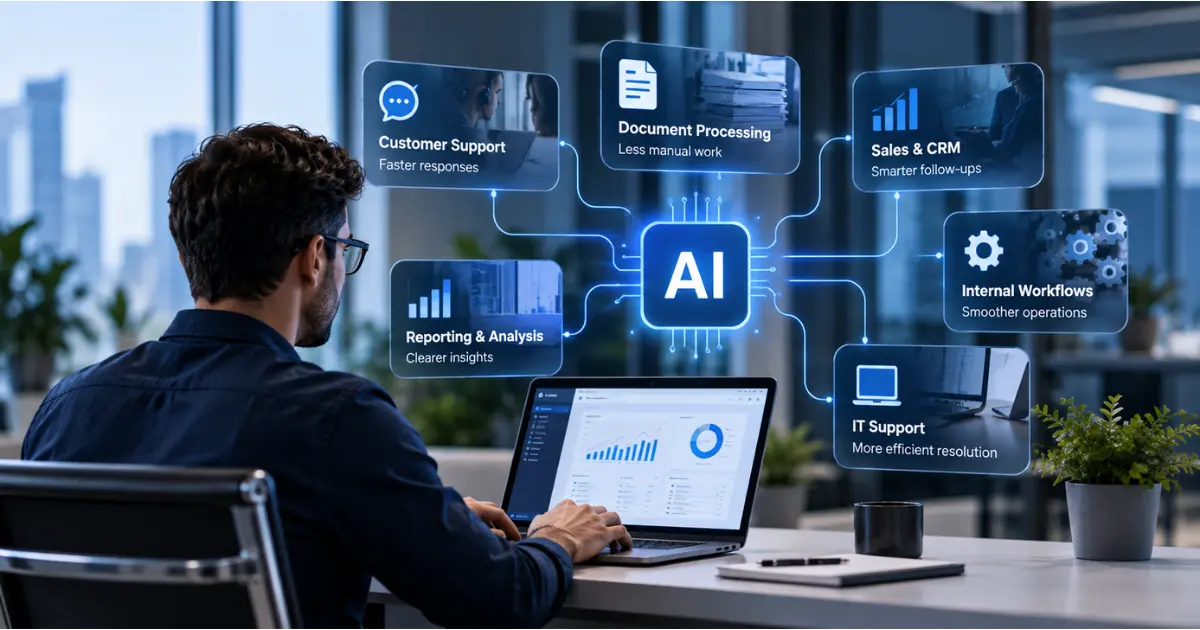
AI & Automation
See how practical AI automation can streamline everyday workflows, improve productivity, and support smarter operations.
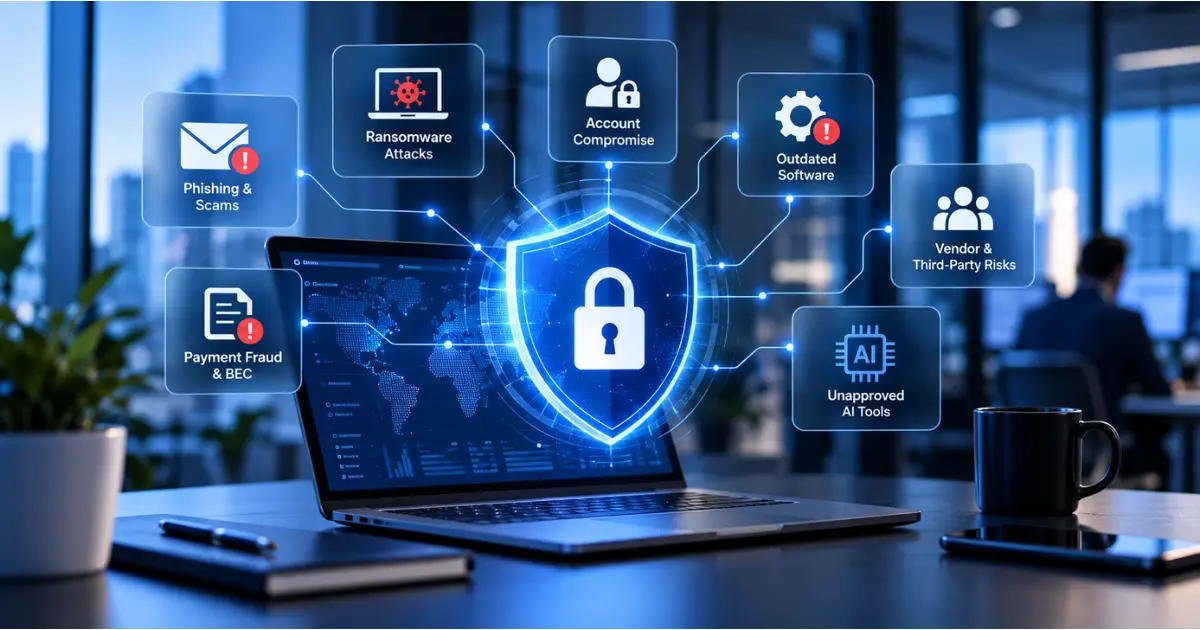
Cybersecurity
Understand the most important cybersecurity risks facing small businesses and the practical steps that help reduce exposure.
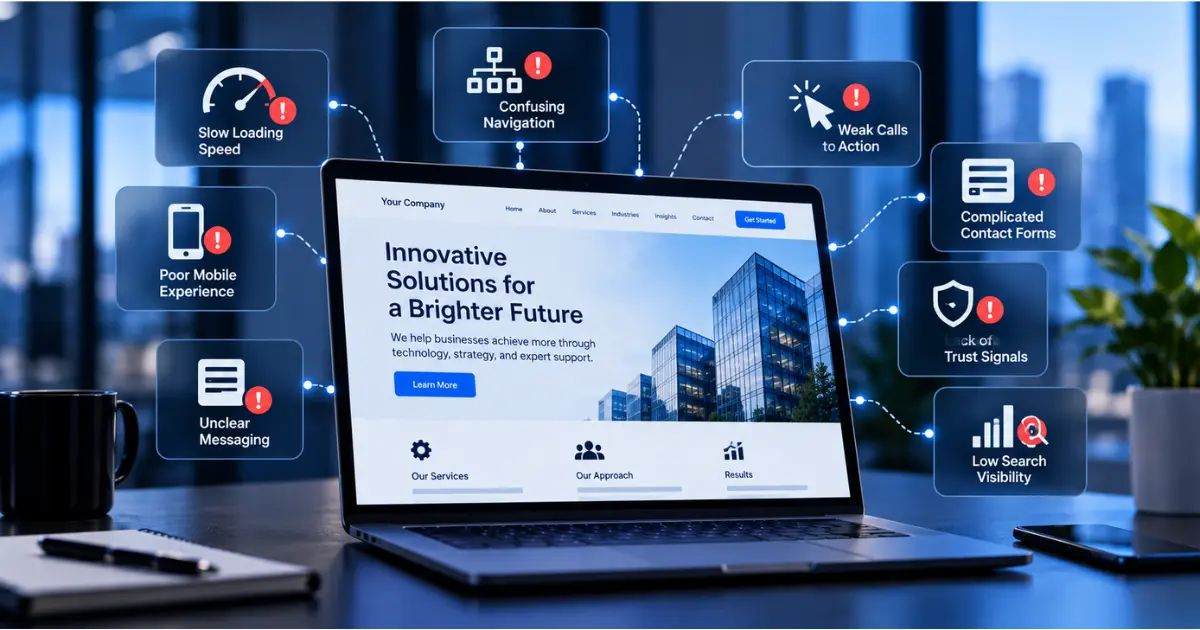
Brand & Growth
Learn the warning signs that your website may be losing opportunities and where to focus your improvements.
LET’S CONNECT
Talk to Our Team